Drive-By Truckers

Drive-By Truckers Rock Forward Into a New Era

Town Park Stage: Sunday, July 14, 3:45-5 p.m.

With the Drive-By Truckers set to hit the studio in August to record the band’s tenth studio album, co-frontman Patterson Hood said fans have plenty to look forward to in the near future.

Now a paired-down five-piece band, following the departure of guitarist John Neff, the band has been playing a few select shows throughout the spring and summer months, while Hood and guitarist Mike Cooley wrap up solo tours of their own. With a focus set for recording the bands newest album since 2011’s Go-Go Boots, Hood said he couldn’t be more excited about the new direction.

“We are going to record a new record in August,” Hood says. “We’ve got a bunch of new songs, and I think it’s going to be really good. The band is in a good place right now and we’ve been playing really well. We plan to rip the album out pretty quick over a short period of time.”

The new record will be recorded in Athens, Ga., with the band’s longtime producer and record engineer David Barbe. Most of its songs have been written by Hood and Cooley, but Hood says, there will be a lot of collaboration from the entire band once they get into the studio together.

“There’s not an overriding theme to these songs on this record, at least there’s not one that’s apparent yet,” Hood says. “We are not delving into any specific subgenre on this album. It’s really just a bunch of good songs played by the band as we are right now.”
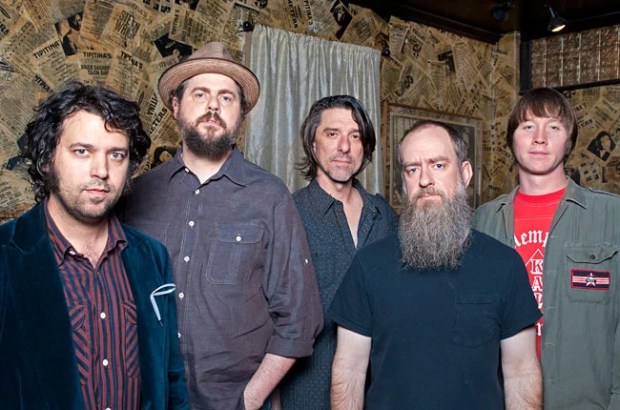
The Drive-By Truckers. (Courtesy photo)

Besides Cooley and Hood, who have always provided the backbone to the Drive-By Truckers throughout its history, the band’s current lineup includes Jay Gonzalez (guitar, keyboard), Brad Morgan (drums), and Matt Patton (bass).

Patton, who made his name with the Dexateens, joined the band after bassist Shonna Tucker left in 2011.

“Once we found out that he was an option, we were pretty excited right of the bat,” Hood says. “He’s an incredible musician, and he’s a super cool guy. Those are some key things we need in this band. He’s a great showman and is a lot of fun on stage. It’s been a really good match for us.”

In addition to recording a new album in August, the band is set to re-release a remastered version of its first live album, Alabama Ass Whuppin’, on July 16. The re-release will give Truckers fans a chance to get a hold of this out-of-print gritty live album that was recorded in Athens and Atlanta, Ga., in the fall of 1999.

“We didn’t know if this was ever going to happen,” Hood says. “Those tapes have been missing for 10 years. After we got them back, I listened to the raw tapes, and they sounded so much better than the record sounded, I was amazed. It was never really mastered properly so I’m very excited about it. It’s from a time in our band that was before most people knew about us. It’s kind of from our punk rock days.”

Hood says the band is having a good time breaking out some of that album’s songs again, on their current tour.

We’ve been pulling out more songs from that era, some of which haven’t been played in years,” Hood says. “Of course, I am really looking forward to having a bunch of new songs out there before too long. We haven’t started playing any of those new songs yet, but we’ll start incorporating one or two of them in our shows before too long.”

With the new album on the horizon, Hood says to expect a full-on tour starting early next year. Veterans on the road, Hood and Cooley have collaborated for nearly 30 years. While their relationship in the band may have been bumpy at times, Hood says it continues to strengthen, as the Drive-By Truckers move forward.

“I think there is a chemistry between us, or else we wouldn’t continue doing it,” Hood says. “We get along really great now. That didn’t necessarily happen when we were in our 20s. Right now, I think it’s been better than we have ever been. I love his songs. He’s one of my favorite songwriters, and I am thrilled to get to play them.”

While the Drive-By Truckers is notorious for its grueling tour schedule – in the past, 200-plus shows a year was the norm – Hood says while they still love to tour, they don’t hit the road as hard as in years past.

“We don’t play 200 shows a year any more,” Hood says. “Those days are over. I’ve got kids and a wife that I want to keep. It’s something we did, and I am real proud of what we did, but don’t ever want to go back to that. You do get tired of travelling so much.” On the other hand, “I never get tired of playing. If I could play 200 shows a year and not have to travel, I would do it.”

For now, Hood looks forward to the rest of this summer’s tour dates, and then getting back into the studio. With its current lineup, Hood believes exciting times are on the horizon for the Drive-By Truckers. 

“There have been a bunch of long-term but revolving cast members in our band,” Hood says. “All of them are great, and I am very proud of all the different eras of the band. I couldn’t be more proud of the one we are right now. It’s a particularly good one. It’s like the sports car version – it’s quick on its feet, it’s lean and mean. I am really enjoying that right now.”
New England’s Winning Season

The Asterisk on New England’s Winning Season

I can’t tell you how much I hate the New England Patriots. I have always hated them, but now I hate them more than ever.

Last Sunday’s matchup between the Pats and the Colts was truly an exciting game to watch and, at the time, I respected New England’s fourth-quarter comeback to beat Indy 24-20. What came after the game is simply ridiculous.

Coach Bill Belichick and the rest of his unbeaten New England cronies suspected Indianapolis of pumping up the crowd noise inside the RCA Dome during the game. This – coming from a coach who admittedly cheated earlier this year – is one of the most absurd allegations I have heard. So absurd, I am not sure to take it seriously.

Apparently, an “odd reverberating sound pattern could be heard on the CBS broadcast, but not inside the stadium,” reported The New York Times. A statement released by NFL officials said CBS had explained the “unusual audio moment” as being the result of tape feedback. With that, the NFL cleared the Colts on Monday of the charges made by the Patriots.

“We trust this will put an end to the ridiculous and unfounded accusations that the Colts artificially enhanced crowd noise at the RCA Dome in any way,” the Colts told the Times in a statement.

Belichick also said after the game that the Patriots’ coach-to-quarterback communications weren’t working.

“What all was going on, I can’t tell you but I can tell you that from a functional standpoint, the coach-to-quarterback was basically useless,” Belichick told the Times.

Boohoo. I could respect the fact that they made adjustments without their communication line to win the game, but to come out and whine like he did and then make accusations of increased noise is embarrassing. They are, after all, in the NFL and are paid high salaries to run an offense. The team could have done without the bitching and moaning after a grand victory.

Let us not forget that these allegations are coming from known cheaters in this season’s “Spygate” controversy. Early in the NFL season, the Patriots were fined $250,000 for recording defensive signals to opposing players on the field. They must also forfeit a first-round draft pick next year if they make the playoffs, or second- and third-rounders if they don’t.

A Patriots’ video camera aimed at New York Jets coaches (one of which who is a former Patriots defensive coordinator) was confiscated by league officials during the first quarter of the team’s 38-14 win over the Jets last September.

The Pats undefeated season and their cheating is on everybody’s mind, even if they don’t admit it. Dallas Cowboys head coach Wade Phillips told Peter King on Inside the NFL just before their loss against the Pats that it is on everybody’s mind.

“Hey, New England was caught cheating and it is a black mark on their success,” Phillips told King.

But then Phillips later retracted his statement by saying on ESPN’s Mike and Mike Show that, “I think it’s ludicrous to demean a team, an organization that has done a great job and won all those games, and deserved every bit of it. They won all those championships. They deserve every bit of what they got.”

More recently, former Miami and only season-long undefeated coach Don Shula pulled the same stunt by initially telling the New York Daily News that, “The Spygate thing has diminished what they’ve accomplished. You would hate to have that attached to your accomplishments. They’ve got it.” Shula compared the Patriots scandal to that of the asterisk on Barry Bond’s homerun record.

But, like Phillips, Shula changed his tune after he made those comments.

“If they run the table, and they win all the games, then they are doing it within the rules of the NFL,” Shula told ESPN’s Mike and Mike. “And there shouldn’t be any asterisk to it. That would be the accomplishment that they made. It would be the best in all of sports.”

I, for one (I know I’m not alone), have already attached an asterisk on any good thing the New England Patriots accomplish from here on out. They cheated. They are no better than other past cheaters, like Pete Rose. It is too bad for them if they become the second team in NFL history to go undefeated because they cheated early on.

Nobody really knows (besides Belichick) how long the Pats have been cheating but I guarantee the Jets game wasn’t their first time. So yes, the Patriots may win out and they may be their fan’s champions, but the rest of us aren’t fooled, just like Barry Bonds didn’t fool the rest of the world.

At some point the Pats’ luck will run out. I can’t wait to see the tear-soaked Grinders in Boston when their undeserved triumph ends.

Farewell to a True Community Journalist

Farewell to a True Community Journalist

I think I can speak not only for the staff here at The Watch, but for our readers and the entire Western Slope community, as well, when I say that the departure of photojournalist, reporter and all around newsman William Woody is going to be felt for a long, long time.

Next week, Woody will pack up his cameras, lenses and faded Duke T-shirts and head to Ashville, N.C. where he will take his career to the next level as a staff photographer for the Citizen-Times.

In this move, he’ll be trading Six Shooter Pale Ales for Cheerwine, Bronco Sundays for NASCAR Sundays and Telluride’s music festival scene for Ashville’s lively bluegrass scene.

All in all, it’s an exciting move for the Woody family, and I know he will bring a dedication to news and his photographer’s eye to the Ashville scene that they’ve never seen before.

The Citizen-Times is lucky to have Will Woody on board.

And we’ve been lucky to have Will Woody shooting, writing and showing an unparalleled dedication to community journalism for the past couple of years. As a photographer, my words can’t begin to describe the talent he has behind the lens. You’ve all seen his work on these pages before, and in other publications, including The Denver Post, The Grand Junction Daily Sentinel; he grew up in the business, and began shooting for the Montrose Daily Press in the days when his father, Stephen, was its publisher.

Nowadays, Woody, as we know him, seems to be everywhere in the region, shooting everything from high-speed shots of high-school football touchdowns to the first ears of the Olathe corn harvest, taking a GoPro ride on a crop duster and portraits of World War II veterans and close-ups of the Montrose County Commissioners, most likely to their dismay. Woody captures these moments as only he can, and we will miss his artful chronicles of life in this region in our pages.

Woody’s storytelling as a photographer carries through to his reporting; he knows a good narrative story when he sees one. Very rarely do we get a story from Woody that doesn’t have a deeper meaning, below the surface. From his story about homelessness in Montrose to his telling the stories of two teenage mothers continuing their education, his humanity shines through. He works hard to find the stories nobody else is telling and tells them, using pictures and often words, as well, as nobody else can.

Woody is dedicated to his profession. If you are a regular reader of his Facebook feed, you know what I’m talking about. He loves a scoop, and will work (to the dismay of his wife, Jeana) all hours to get one. His dedication to the police scanner on a Sunday last November was at the heart of reporter Samantha Wright’s prompt, accurate and award-winning coverage of the mine tragedy in Ouray.

While he takes his job seriously, Woody knows how to have fun in his work. Take, for instance, the first sentence of his first-person account of his mock firefight with the Montrose Police SWAT team last January: “All I was told was to bring gloves, a heavy coat ‘and something to protect your junk.’ Those instructions didn’t really intimidate me; I’ve been looking for a gunfight with the police for some time, and now I was preparing to reap what I’d sowed.”

Priceless.

On a personal note, I am going to miss slugging back beers with Woody at the Horsefly after the paper’s gone to bed, hanging with Jeana occasionally and horsing around with his two munchkins, Stella and Wilson. I look forward to watching them grow up on Woody and Jeana’s closely followed Facebook feed.

Community journalists wear many hats and keep odd hours, going from sports reporter/photographer on a Tuesday evening to capturing  the community’s heartbreak upon the death of a child to the drudgery of town and county politics and school board meetings, being fair to your sources and compelling your readers, at the same time.

But foremost, a community journalist has to love his community. Woody embodies the ethos of community journalism, and we will miss him, here in Montrose, and here at The Watch.

He is irreplaceable.

River High, Boaters Busted

River High, Boaters Busted

CORTEZ – It’s not often that the Dolores River below McPhee Reservoir has high enough flows for rafting, so when the Bureau of Reclamation released water in early May, paddlers and boaters of all types flocked to the put-in – and so did the law.

Normally, Bureau of Land Management rangers and officers patrol at boater put-ins to make sure boaters have paid their daily user fees, brought proper human waste systems (groovers) and are clean and tidy at camps.

On the weekend of May 12, BLM Law Enforcement Officer Keith McGrath took the extra charge to write several boaters possession of marijuana citations at Bradfield Camp on the Lower Dolores River.

“I can tell you that there were ten citations for possession,” McGrath said. “As far as the details, until those who received citations go to court, I can’t say much about it.”

Rumors have spread throughout the boating community concerning the details of the boater bust. Some have said the bust included the Colorado State Patrol, while others have said that the bust involved a high number of personal searches.

“There was no State Patrol involved,” McGrath said. “We had three [BLM] officers there and there were no searches. My title as a BLM ranger is to enforce all federal laws. This type of incident is not at all uncommon, and it is fairly regular.”

Several people posted their own accounts of what happened that weekend at Mountainbuzz.com, a website where boaters share information.

“I just want to give folks a heads-up on what the BLM is up to on the Lower Dolores River,” one blogger wrote on the website. “There are a couple of newbie law enforcement types who get [pleasure] giving out citations for smoking and/or possessing marijuana. Their tactics include lurking in the shadows of your camp and watching your activities while around the campfire, etc. They are not averse to searching without probable cause.”

Another blogger, who was cited that weekend wrote, “We were camped at the Bradfield Campground Friday night. The four of us were chilling with some beers and green stuff. I noticed three folks creeping up and thought they were friends from another camp. All of a sudden flashlights, interrogation and intimidation. We were all cited even with them finding only one pipe and one gram of green.

“I knew of at least 15 others that were cited that night. The next day we put in with maybe 100 other people. No BLM ranger then to check for groovers, firepans, etc. The river is getting trashed but at least no one was getting high.”

For some, getting busted for pot possession is one thing. For others the problem is that the rangers were neglecting their ranger duties while lurking in the shadows and sniffing the air like a DEA beagle at a Mexico boarder crossing. The cost to camp at Bradfield and Dove Creek Pumps is now an issue, and some wonder where that money is really going.“What really kills me about this whole thing, is that the BLM wants $8/night to camp at both Bradfield and Dove Creek Pumps,” another blogger wrote. “The campgrounds are completely trashed, especially DC Pumps. We spent over an hour cleaning up broken glass, cig butts, garbage, etc. before we could even think about setting up camp for the evening. So, apparently the BLM has enough money to hire a couple of dicks [detectives], but they cannot afford to hire anyone to clean up the garbage dumps they call campsites. Be careful down there folks, this crap needs to be stopped.”

Cops, Guns and River Protection

Cops, Guns and the Lost Idea of River Protection

This week, I am going to turn my back to the national sporting scene. It’s river season here in the West and I have some things to get off my chest.

As this winter’s abundant snowpack begins to provide life to the rivers in and around the Colorado River watershed, boaters of all types are spending as much time on the water as possible – I know I am. And in doing so have noticed a disturbing occurrence – an overabundance of gun-carrying cops patrolling these recreational river wonders.

Last week, I took off with a group of friends to raft the Cataract Canyon section of the Colorado River in Utah. Most of this section of river travels through Canyonlands National Park.

After putting on the water, it became apparent very quickly that we were now on the National Park Service’s turf, heavily patrolled by their hot-dog rangers. Throughout our six-day journey on the park, we were incessantly harassed by a park ranger, one whose communication skills were anything but eloquent.

Here’s how our first conversation with this ranger started after he pulled up in his oversized diesel motorboat as we sat eating breakfast in all the canyon’s glory.

Ranger With Gun: “Who is the permit holder here?”

Permit Holder: “I am.” (Walks over to greet the ranger who is not surprisingly wearing hazer cop glasses like those found on the set of Reno 911.)

Ranger With Gun: “You see this?” (Points to Permit Holder’s name on permit.) “This is who is going to get a ticket when any one of these guys (points to us) screws up. Got it?”

Permit Holder: “Yes.”

The tone of our subsequent conversations with the ranger did not improve. Instead of acting like he cared about the delicate environment surrounding us, the cop simply wanted to assert his authority. And with a gun on his belt, he certainly had it.

Two years ago, in the Gunnison Gorge National Conservation Area, some friends of mine were checked by another so called “law enforcement official” from the Colorado Division of Wildlife. This time I actually felt threatened when he pulled up in an inflatable kayak and the first thing he did was pull his pistol and lay it across his kayak on top of a white towel. Once the gun was securely in place – resting on the rocking boat – he proceeded to check for fishing licenses.

One guy didn’t have one and as the conversation got heated and the ticket was issued the cop had moved almost 30 yards away from his boat – and his gun. Gun safety anyone?

An associate of mine tells me that in his Colorado fishing experience, “at least twice a ‘law enforcement official’ has asked for a fishing license with a hand hovering over his gun.”

Is that really necessary?

And let us not forget last spring on the Dolores River when another “law enforcement official,” this time from the Federal Bureau of Land Management, busted a number of boaters for smoking pot on the beach before their put-in. Some of those present during the bust said the officer (who didn’t check for proper river equipment, i.e. fire pans, groovers, etc.) was lurking in the bushes the night before with his nose to the air searching for the scent of pot like a beagle in an airport.

Law enforcement on our rivers is getting away from its main purpose. And there are too many damn guns to patrol people armed with fishing rods, boat pumps, and empty Bud cans. At any given time, on any given river in Colorado, a boater enjoying the recreation this state has to offer can be checked and questioned by personnel from at least three different organizations – all of whom carry guns. First, the Colorado State parks and Recreation Department will question you over the number of band-aids in your first aid kit. Then, a BLM officer can question you if you brough a groover. And finally, a DOW officer can question you about your fishing license.

To put it simply, there are too many cops with guns patrolling people who are generally trying to get away from cops with guns. And the problem with this may lie with President Bush in his antics to create “national security” after 9-11. Right now any cop from any organization has jurisdiction over, well, everything. 

But the travesty of this situation isn’t just the hardships put on recreationalists. It lies in the fact that a position was once filled by those who have studied river ecologies and have a natural love of river ecosystems is now being filled by heavy-handed, law enforcement types who don’t know the difference between cryptobiotic soil and beach sand, but can tell you the range of their .45 mag.

The federal/state government agencies who are charged with protecting these rivers, which are so important environmentally as well as financially, should rethink who they hire. It is time to go back and get those who are educated in environmental sciences patrolling rivers. Rangers, in most instances, shouldn’t have to carry a gun and their past experience should not be just the police academy or working in a heavy patrol unit in Afghanistan. Our rivers are not Hogan’s Alley and shouldn’t remind us of 1984.

Although few and far between, I know there are still dedicated river rangers out there who truly care about the river and aren’t afraid to check to make sure everybody is using the river in a clean, respectable way through friendly conservation. I commend you for that and I appreciate the work you do. I am sure, because you are just a ranger – not a “law enforcement official” – and don’t carry a gun, you are paid less.

Public Relations Problem

Montrose County’s Public Relations Problem

Montrose County has a public relations problem.

As a reporter covering various issues that are often contentious, and with varying viewpoints, I work to believe that all parties are acting with the best of intentions, that they have good reasons for what they do and say.

In our region of small municipalities and counties, stretching from the North Fork Valley to Norwood, Telluride and Naturita, most of the time, this is true. Yes, there are conflicting perspectives, but most people have good, reasonable reasons for acting the way that they do.

Living in Montrose County, I’m finding that belief harder to hold on to.

In the course of covering the constant back-and-forth of the county’s dealings with a possible second Fixed-Base Operator at the Montrose Regional Airport, I was surprised to see that announced on the agenda for Monday’s regular Montrose Board of Commissioner meeting, in the small BOCC meeting room, on Monday, June 16. I had heard numerous times – directly from the commissioners, as did most interested parties – that when the proposed agreement with Majestic Skies went before the BOCC, that would take place at an evening meeting at Friendship Hall where more interested parties could attend, and weigh in on the proceedings.

It was also promised that the commissioners would have a representative from Majestic Skies on hand to answer questions from members of the community.

Imagine my surprise, at 7:18 p.m. on Friday, June 13, when I received an email noticing the commissioners’ meeting agenda for early Monday morning, the very next business day.

Yes, the FBO agreement with Majestic Skies was on the agenda. No, it wasn’t at the long-promised evening meeting. No, it would not take place at the relatively spacious Friendship Hall. And no,  it turned out, there was no Majestic Skies representative taking questions.

After several postponements of the agenda item, supposedly to allow for more public participation, why the sudden rush?

Despite hearing from members of the public who did attend the abruptly called Monday morning meeting that had not been given time to review the agreement under consideration, commissioners David White and Ron Henderson basically said the time had come to approve the agreement, and that’s what they did. Commissioner Gary Ellis, sticking to what the commissioners said previously, dissented, and said repeatedly that the decision was too big for that time and that venue.

For Henderson and White, it didn’t matter.

As a reporter, I want to believe White and Henderson had reason to approve the Majestic Skies agreement, then and there, but what I didn’t hear was anything about why they had reneged on what they promised the community they would do. Henderson and White’s decision to push the issue made me wonder, “What’s really going on here?”

Making it worse was how Commissioner White tried to explain his decision-making process, complaining that he  tired of the lawsuits, name-calling, legal threats, Colorado Open Records Act requests, and so on. In essence, White threw up his hands, telling the community, in effect, I am doing noble work here;  stay out of it. Maybe White is acting aboveboard and has the community’s best interests at heart – he, like other participants in the public arena, can start with the benefit of that doubt.

But if White is acting reasonably in this matter, he sure isn’t explaining the reasons for his actions at all clearly.

From the very beginning, the process of approving a possible second FBO at MTJ has been anything but understandable. The delay in announcing the name of the company wishing to be an FBO came first. Why the secrecy? If I were the commissioners, I would have stood up at first available meeting and said look, “We’ve been contacted by a company wishing to be an FBO at our airport. Here’s the email they sent. We, by FAA regulations, have to consider it.”

I am fairly certain Montrose County’s residents, by and large, would have accepted that explanation. Instead, the identity of the proposed new FBO operator was kept secret. The county continues to withhold Majestic Skies’ initial proposal. For what? From my perspective, it seems Majestic proprietor Larry Danielle has deep pockets and wishes to build and operate a FBO. What trade secrets are they obligated to hide?

White was very critical of citizens who have been critical of this process. As a citizen, how can you not be critical? The county is spending tens of thousands of dollars defending lawsuits. The commissioners, in my view, regularly discuss county matters amongst themselves, off the record. (Ellis and White went out the back door during a meeting recess into the alley during the last gravel pit hearing; Watch photographer William Woody snapped a photo of all three of them huddled in a recess at the April FBO hearing.) Now maybe they are simply discussing the shade of their brown boot polish or their dislike of ObamaCare, and maybe not? What I do know is that discussions like that create a public relations nightmare.

Why don’t they just release the records under Colorado Open Records Act? What do they have to hide? Their willingness to fight CORA requests creates skepticism.

And there are other actions I believe create public skepticism as well. For instance, the commissioners have a relatively new rule that now, in the public comment portion of their meetings, they will not engage with the public – meaning that they no longer have open conversations, on the record, with constituents. Is this what it has come to? Your elected officials, as an entire body, are no longer willing to have a conversation with you in front of others? This makes me skeptical of the commissioners’ intentions.

White suggested at the June 16 meeting that the county has been inundated with CORA requests. Over the better part of eight or nine years as a reporter covering local government in San Miguel and Ouray counties, including the towns of Telluride, Mountain Village, Ridgway, and Ouray, I’ve never had a problem getting my hands on public documents. In fact, the documents I request are readily made available, for accuracy’s sake. Before taking the Montrose County beat, I had never once been told to file an official CORA request. Boy, did that change, when I stepped into the Montrose County political landscape.

And while it took some practice to figure out Montrose County’s labyrinthine online system to get actual commissioner meeting packets, it was doable. I feel for those residents who tried to find the actual agreement between the county and Majestic Skies: I know firsthand that it wasn’t easy.

So, if I could make a suggestion to Montrose County when it comes to meeting documents and packets, I would suggest they take a look at Ouray and San Miguel counties. Getting a hold of meeting documentation, no matter how thick and elaborate it may be, is easy. But in Montrose County, it’s not easy, and that’s a big problem.

If we are to believe the Montrose County Commissioners have the best of intentions, then they should start acting like they have the best of intentions. Right now, all they’ve done is create a world of suspicion, and then placed the blame on  constituents, for suspecting the worst. I am not saying they’ve done anything illegal, but they certainly haven’t done anything to keep public suspicions at bay.

Perhaps the commissioners should hire an effective PR firm to help them communicate their intentions. It certainly would be cheaper than the barrage of lawsuits they are continuing to defend.

End of an Era

The End of An Era

For all of us here at The Watch newspaper, it’s a bittersweet time. This is the last edition of The Watch under the ownership of Marta Tarbell and Seth Cagin, before it sells to the Telluride Daily Planet.

For the past 17 years, Marta and Seth have dedicated themselves to providing news that was accurate, informative and often humorous – in a beautifully designed format. It’s a quality product that is hard to come by in this ever-changing world of journalism.

In the eight years that I’ve been a part of The Watch family, I’ve often heard stories of this newspaper’s earliest days, when the paper was actually laid out on the bed in their Telluride home’s master bedroom. Volume 1, Number 1 of The Telluride Watch was published on Friday, Jan. 17, 1997, with “Council Denies New Protections for Historic Sheds” as its lead story on page 1. The edition also included a story about the swearing-in of San Miguel Commissioner Art Goodtimes, on page 5. Goodtimes, now the longest-running columnist for The Watch, remains a San Miguel County Commissioner to this day.

With a masthead of just two and with a motto promising “straight reporting,” “great cartoons,” and an “eight-day calendar,” Seth and Marta launched a newspaper that would later become the voice of an entire region, from Montrose to Ouray to Ridgway, and from Telluride to Norwood to Naturita.

As the newspaper grew over the years, so did the number of people who would call The Watch home. A decade after its first edition, the Watch masthead of two grew to a masthead of 33. Today, following the downsizing effects of the Great Recession, The Watch has a masthead of 21.

While Marta and Seth brought their journalistic knowledge and sense of news to their own paper, one of their greatest attributes in publishing The Watch was the way they treated the people who worked for them. They made The Watch a family. Not only would they give guidance when guidance was needed, but they would also allow staff to be creative in their own individual ways. It didn’t matter if you were a writer, a graphic designer and or advertising sales representative, they wanted your creativity unleashed to help the entire business succeed. They always treated everyone with respect, and in return, we all did our best to make The Watch the best paper in the region. Each and every Thursday, we all were proud to pick up the latest copy of The Watch and see that week’s work in print. It never got old.

Forward-thinking newspaper publishers like Seth and Marta naturally attract creative talent. In my tenure here at The Watch, I can honestly say I’ve worked with some of the most creative, upbeat and dedicated personalities in and around the region. Here are just a few of the people who have, over the years, made The Watch what it is today: Our columnists over the years – including Jack Pera, Art Goodtimes, Rob Schultheis, Peter Shelton, Martinique Davis, and the fiery voice of the late Grace Herndon – not only informed readers, but drew a line in the sand about important issues. Of course some of The Watch’s most heated and contentious columns were written by Seth, who always had a way of making his point seem impossible to disregard.

Community journalism is all about creating relationships, and The Watch always worked tirelessly to make advertising work for businesses throughout the region. Patrick Nicklaus and Peggy Kiniston, who worked for the paper in years past, laid a strong foundation for our current advertising staff of Tammy Kulpa, Melissa Lonsbury and Alec Jacobson. Advertising makes the world go ’round in the newspaper business, and without the hard work (often the hardest work) from these folks, I wouldn’t be writing this today.

The Watch, since it expanded to cover the entire region several years ago, has always taken pride in covering local news first and foremost. There’s a reason why you don’t see Associated Press stories in The Watch. Over the years, we have had some very, very talented writers report the news in these pages. Of course Seth and Marta, The Watch’s original newsroom, laid the foundation to good reporting. Others who came along over the years included Peter Kenworthy, Peter Shelton, Jeff Hunt, Adam Smith, Douglas McDaniel, Krista Sherer, Allison Perry, Samantha Wright, Andy Sawyer, Martinique Davis, and William Woody, to name a few.

Of course the stories these reporters filed each and every week always looked and read their best, thanks to the editing skills Jessica Newens, Josie Jay, Marta and Leslie Vreeland. To those who have edited me time and time again, I can’t thank you enough.

The photography work of Woody, Alec Jacobson, and, of course, Brett Schreckengost brought life to all those stories in a way that nobody else in the region could.

To put it all together, on a page, we must give a nod to The Watch’s design team over the years, including Anne Reeser, Casey Nay, Cecily Bryson, Barbara Kondracki, Rick Bickhart, and Nate Moore. No paper in the state of Colorado has a better, more aesthetic design than The Watch.

And, of course, none of it this would have been possible without the circulation services of Scott Nuechterlein and his crews for distributing The Watch to the far reaches of San Miguel, Montrose and Ouray counties.

On a personal note, while I worked in offices around the region, I particularly liked working in the Telluride office best, alongside Marta. I will miss our chats about literature, the latest in The New Yorker, upcoming news stories and, even, a little gossip here and there. I think Marta and I brought out the best in each other at The Watch. It was work, but it was always fun, and I always looked forward to it.

While I’ve only listed a few names from the paper’s masthead (there are certainly more who I’m sure deserve mention), my point here is this: The Watch is and has been a family of dedicated watchers. They are all the DNA of what this great regional newspaper is, and was. It is a conglomeration many different talents and personalities. Marta and Seth have been the glue keeping it all together and letting it grow collectively.

It goes without saying that the positive mark Seth and Marta have left on not only Telluride but the entire region with The Watch and its special publications is immeasurable. I wish them luck in their next, more relaxed, adventures and hope they can spend more time consuming media than worrying about creating it.

I wish the new owners of The Watch the best of luck, as well. They have big and important shoes to fill.

Exotic Earth

Say No to Stale Beans and Yes to Exotic Earth Coffee Roasters

For many coffee geeks, pouring hot water over freshly ground coffee beans can be a beautiful thing. If the coffee is truly fresh, the ground beans will release carbon dioxide, bubbling up in what aficionados call the bloom.

Whether pouring water over grounds in a French press, a Chemex, an AeroPress or a classic pour-over system, releasing a good bloom from the grounds is a visual sign that the coffee you are about to taste has been freshly roasted and, thus, the flavors will be fresh as well.

Because coffee beans release carbon dioxide on their own after roasting, finding freshly roasted beans in your local grocery store that’s been roasted in the past ten to fourteen days can be tough. The fact of the matter is that many of the coffee beans we buy in grocery stores are actually stale and fail at bringing a lively cup of coffee to the breakfast table. It’s the reason why many coffee junkies have sought out local roasters or, actually, started roasting coffee beans at home with various contraptions.

Leaving the home roasting contraptions aside, the region – from Telluride to Montrose – has a few local roasters and finding freshly roasted coffee is not an impossibility. In fact, the region has a number of roasters who are putting out great varieties of beans and all are as fresh as can be.

Exotic Earth Coffee Roasters in Ridgway, with its expanding region-wide distribution list and its quaint location where you can enjoy a fresh cup of coffee while picking up fresh beans, has come into its own since opening its doors at its location in the Ridgway Park industrial complex just over a year ago.

Exotic Earth’s partnering ownership of Rich and Karen Avery and Dan and Julie Wesseling work with traders in Oakland, Calif., who are able to source organic, shade-grown fair trade coffee beans from equatorial locations around the world. Exotic Earth is dedicated to buying green coffee beans from suppliers who not only work to preserve the environment that produces the coffee but also improves the livelihood of the growers.

Using a Diedrich roaster, Exotic Earth roasts about 150 pounds of beans a week, then blending, often grinding, bagging and then delivering the coffee to a growing number of hotels, restaurants and retail shops around the region including the North Fork Valley, Ouray and Telluride.

Exotic Earth has a number of blends that have become very popular including its House Blend (dark), the Raise the Dead Blend of three exotic varieties (full bodied dark), and the White Knuckle Blend, which is a robust blend especially suited for espresso.

If you are looking to taste a single origin variety, Exotic Earth has what you need as well, including East Timor (dark, rich, full bodied); Guatemalan La Laguna (medium roast, relaxed); Sumatran (dark and flavorful); and Ethiopian Sidamo (dark, spicy, distinctive).

Full of scales, label makers, newly arrived bags of beans, buckets of freshly roasted beans and grinders, the back of Exotic Earth’s operation is just that: a local coffee roasting operation that’s growing and getting its products out.

The front, retail half is bright, new and inviting. It’s a place you want to hang out and enjoy a cup of fresh coffee, especially when you know the coffee you are drinking is being roasted a mere 10 steps away. Photos of brightly colored green and red coffee beans, and African women dressed in equally brightly colored garb, tell the tale of the Averys’ recent travels to Ethiopia, where they visited several coffee plantations to see for themselves how their product is grown.

Don’t go to Exotic Earth thinking you are going to order a double tall skinny vanilla latte. Coffee, straight up, is what’s being served. Perhaps the most rewarding part of visiting Exotic Earth is you can pick up fresh roasted beans right from the source. There’s no harm in asking when their bulk beans were roasted. Perhaps, they’ll get you a pound of beans that was roasted the night before.

It’s reassuring to know that when you want a fresh brewed cup at home – no matter what your apparatus is – you can get beans that will offer a full bloom and full, complex flavors. Fight the war on mediocre coffee and just say no to stale beans.

PRICES: Bulk beans are .75 cents per ounce; $9.50 per 12-ounce bag; or a one-pound bag is $12.65.

GROWING: Keep an eye out for Exotic Earth Coffee at the region’s retail markets. You never know where this local roasting company’s coffee will be on the shelf next.

Open Monday-Friday from 8 a.m. to noon.

Alpino Vino

A Perfect Pairing: Alpino Vino and Skiing in Telluride

From the steeps of the Gold Hill chutes to the sweeping views from See Forever, Telluride is a world-class ski resort. Now, it has the world-class on-mountain dining it deserves.

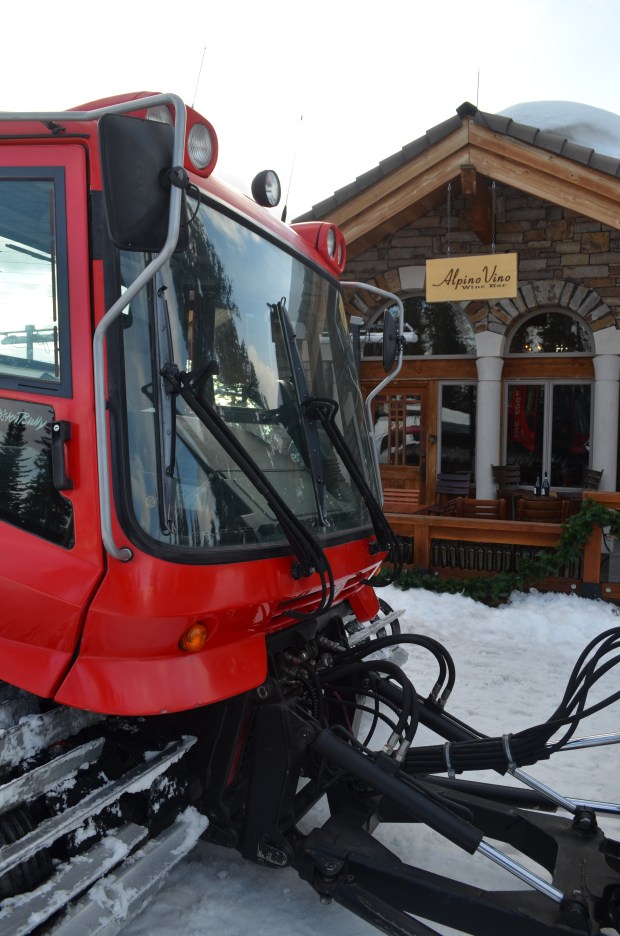
The nighttime experience at the European-inspired Alpino Vino takes diners out of this world, almost literally, beginning with the half-hour ride in what’s probably the world’s most luxurious snowcat – another 1,000 feet up the mountain from the gondola’s 10,500-ft.-high San Sophia Station, its midway point between Telluride and Mountain village.

(Photo by Gus Jarvis)

Daytime visitors to the Gold Hill side of the mountain have probably seen Alpino Vino’s quaint, pitched-roof mountaintop hut already, and maybe even stopped in for its delectable lunchtime fare that begs to be paired with a glass of wine. Think charcuterie, fine cheese, panini and hot soup of the day. For the living-in-ski-boots set, a midday repast at Alpino Vino can quickly become a regular event for the winter (rumor has it Jerry Seinfeld stopped in for lunch almost every day in its early years, when he and his family spent most of the winter here).  And yes, its European-style lunch is worth returning for. But it is in the evening hours that the Northern Italian culinary work of Executive Chef Nicola Peccedi is most memorable, at one of the two nightly prix-fixe seatings where getting there is almost half the fun.

See Forever at Dusk

Excited because we’d heard so much about the Alpino Vino experience, Torie and I got to San Sophia early for a magic-hour look at the alpenglow from Allred’s, perched above the gondola stop. With about 45 minutes to spare before our 5:30 p.m. pick-up, we marveled at the view from the bar of the east end of the valley, with a couple of Dark and Stormy cocktails. Après ski at Allred’s is the perfect end to a perfect ski day, but for once, it marked the beginning of a night to remember.

With our fellow first-seating diners – a pair of locals, four visitors from California, a family from Central America and a couple celebrating their 15th wedding anniversary – we settled into the slow-moving snowcat for an unforgettable ride up See Forever under darkening skies, a sensation mostly reserved for late-night trail groomers.

“Is this your first time?” asked Richard, from Southern California, who winters in Telluride, as the cat lurched forward.

“First time,” I confirmed.

“We love it,” he said. “We try to go as often as we can. We can’t get enough.”

The 30-minute ride up See Forever lengthened when we persuaded the driver to stop midway so we could commemorate the experience with a photo or two of the La Sals off in the distance, glowing in the low evening sun. It meshed nicely with the cocktail buzz as we settled back into the cab of our kingly transport for the last leg of our uphill journey to the rustic restaurant. There, our warm welcome was amplified with glasses of Prosecco – and the chance to catch the last of the alpenglow on the deck, in the setting sun.

A Rustic High-Alpine Italian Setting

While the glowing overhead heaters kept us toasty, our small party of diners shot a few more photos –this time of Wilson Peak, part of the jagged gold-pink skyline in the background, before heading indoors. With seating for just 28 diners, the fairy-tale-cottage style of the restaurant heightens its intimate charm. Originally built as a private home (on a historic mining claim), it opened as Alpino Vino in the winter of 2008/2009, designed to invoke the high-alpine setting of restaurants throughout the Dolomites of Northern Italy. The small building features hand-hewn beams, stone floors and a cozy wood-burning fireplace that makes for a rustic yet comforting feeling. Sturdy furniture – some of it made from repurposed wine barrels – adds to the Italian ambiance; side-by-side seating at a table in front of the fireplace proved the perfect romantic setting for a couple celebrating their anniversary.

(Photo by Gus Jarvis)

After making sure we were all comfortable, the waitstaff started their many trips downstairs to the tiny ship’s galley-style kitchen. The first course of Peccedi’s five-course meal was about to be served.

A Dining Experience Worth Sharing

For $125 per person, Alpino Vino offers a prix fixe dinner you could find in Northern Italy (for another $60, it’s paired with a generous sampling of wines).

A crisp Prosecco complemented our “Sardine in Sapore” first course – a smoked sardine fillet with roasted-pepper relish served atop toasted, fresh-baked ciabatta.

Second up was a handmade radicchio, poached pear and caramelized shallot ravioli, served over a creamy Vidalia onion velouté with roasted tomato vinaigrette. The hand-rolled ravioli, cooked al dente, was sensuously thick, and perfectly highlighted by an accompanying glass of a vibrant 2011 Arneis.

Next came a light tomato soup served with a Parmigiano cheese crisp and perfectly poached quail egg, paired with an impressive 2011 Pinot Grigio, a combination that had our taste buds alive and purring.

For the main course, we had to choose. Would it be grilled petit rack of lamb and eggplant Parmesan with mint basil pesto (paired with a 2009 Valpolicella Ripasso)? Or the poached-then-grilled sturgeon, with a sauté of yellow squash and zucchini, savory fish broth, capers and lemon confit, dressed with micro greens (and paired with a 2010 Fruilano Bianco)?

Luckily, there were two of us. Torie’s lamb, perfectly rare, was robust and full of flavor. My fish delivered an assortment of flavors that were surprisingly subtle, yet complex. We shared. What dish would I get, offered a second chance? Frankly, I’d have to go back twice – once for the fish, and again for the lamb.

Sunset at Alpino Vino. (Photo by Gus Jarvis)

Once again, it was decision-making time, this time, with what to have for dessert the question. Here, Torie and I think alike. We both chose the cheese plate featuring an assortment of cheeses, dried fruits, nuts and truffle honey. After it came, conversation was minimal. For what seemed like an hour, sipping our port pairing, we forgot ourselves. Did I mention there was truffle honey?

Diners at other tables seemed equally absorbed by the chocolate-espresso mousse, made with fresh Chantilly cream and berry sauce, and paired with a 2004 Vespaiola Torcolato.

From the ambiance to the food to the service, the entire evening was like being invited into the living room of a good friend who loves food and wine in equal measure and lives in some far-off, magical place – maybe the mountains of Northern Italy. It felt like a vacation.

The trip home began with a gentle ride in the dark down See Forever, basking in the glow of Mountain Village to our left and Telluride to the right. The mood in the cabin was quiet, its occupants still riding high on the holy trinity of great food, great wine and an at-once stimulating and relaxing atmosphere. I began to think of all the friends and family I have to bring up to Alpino Vino. It’s an experience that must be shared, and it’s one I hope to have time and again.

It reminded me of something, I thought sleepily; it reminded me of how I feel about skiing and snowboarding in Telluride.

And that’s what Alpino Vino is, finally: the perfect complement to the unparalleled mountain terrain that Telluride Ski Area is known for.

Visit tellurideskiresort.com for more information or call 970/728-7446 to make a reservation.

A Close-Up View of Washington, D.C.

A Close-Up View of Washington, D.C.

Most of you probably know that visiting Washington, D.C. can be a fulfilling– if not a positively overwhelming – experience. There’s so much to do, see and learn in such a small geographic area that no matter how much time you have  – from a few days to a few weeks – there is never enough time to see and experience it all.

For those of us lucky enough to live in Colorado, there’s an annual opportunity to visit the nation’s capital and experience it in an extraordinarily informative way. Every year, Colorado Mesa University, the University of Colorado and Colorado’s senior U.S. Senator host the Colorado Capital Conference in June. The conference gives Colorado residents the chance to interact with a the nation’s leaders, including senators and representatives from both sides of the aisle, cabinet members and leaders of the U.S. military.

Having recently returned from the conference, along with 99 fellow Coloradoans, I cannot begin to tell you how rewarding the conference was. It was not only informative, engaging and insightful, it also showed ways in which Washington is not broken, and that good work is being done by our representatives despite the sharp partisan squabbles reported in the national media. With a few days bookending the three-day conference for personal explorations, the Colorado Capital Conference is undoubtedly the key for those wanting to go behind the scenes in Washington D.C. More lucky Coloradoans will have the chance to do it next year, and presumably in years to come.

The conference kicked off on Tuesday, June 17, with a welcome reception in the U.S. Capitol’s Mike Mansfield room. Hosted by U.S. Sen. Mark Udall, Colorado Mesa University President Tim Foster and University of Colorado-Colorado Springs Chancellor Pam Schockley-Zalabak, the reception was a chance for briefing attendees on U.S. Capitol security measures, as well as to informally meet one another, enjoy a beer or two, snap a selfie with a member of the Colorado Congressional Delegation, and allow us normally casual Coloradoans to get used to wearing suits in the soupy humidity of Washington, D.C. in June.

The reception also afforded attendees the chance to hear from members of the Colorado Congressional Delegation including U.S. Sen. Michael Bennet and U.S. reps. Diana DeGette, Scott Tipton, Cory Gardner, Jared Polis, Doug Lamborn, Ed Perlmutter, and Mike Coffman, most of whom wouldn’t be presenting later in the conference.

Perhaps the most important lesson learned that evening is that it’s not OK to wonder the empty halls of the U.S. Capitol armed with a camera. While it was undoubtedly a unique time to see and photograph the quiet capitol rotunda, the suspicious Capitol Police officer wasted no time in escorting me back to the Mike Mansfield Room, where my tattletale badge clipped to my collar said I belonged.

Starting Wednesday, at 9 a.m., inside the impressive Capitol Visitor Center, the conference continued with Admiral James A. Winnefeld, vice chairman of the Joints Chiefs of Staff and the nation’s second highest-ranking military officer. With news of the Islamic State in Iraq and Syria, or ISIS, driving the Iraqi Army from northern Iraq dominating the national media that day, the discussion with Winnefeld quickly turned to that situation, for which he said there are no easy answers.

“It was a little bit of an intelligence surprise,” Winnefeld said of the occupation. “It’s one of those tipping point events that people didn’t anticipate. People ask, ‘Why don’t we do air strikes?’ It’s not that simple. We have a lot of partners in the region. ISIS is an adversary that melts in and out of populations; if we are not careful we could hit the wrong people.”

Up next was U.S. Sen. Ted Cruz, to talk about his number one goal in the Senate, which is “restoring jobs and economic growth” throughout the country. In a sermon-like fashion, Cruz said the key to economic growth is growth in small businesses. “Small businesses right now are hurting. We need to get back to an environment where businesses are improving,” Cruz said.

U.S. Sen. Ted Cruz. (Photo by Gus Jarvis)

U.S. Rep. Paul Ryan made similar remarks, saying the “economy isn’t hitting near the potential” that it should be. He also said the Tea Party movement has done a “very good job” of getting elected Republicans “back to our principles.” And while Ryan said the Tea Party movement has been a benefit to Republicans, U.S. Sen. Chuck Schumer said the Tea Party movement is keeping some members of Congress from compromising, even with legislation like the Immigration Bill, that’s gained bi-partisan support but remains stalled out in the House.

“It’s a win-win in every way,” Schumer said of the Immigration Bill. “It was passed in the Senate with the bipartisan Gang of Eight. What’s holding it up? A small group in the House – Tea Party folks. Even though a majority would like to vote for the bill, they are scared to vote for the bill. Even Fox News supports our bill. The Tea Party threatens mainstream conservatives. They know they should do something, but they are afraid. They are the ‘pray yes, vote no’ caucus.”

At Thursday’s session, Sen. Carl Levin pointed out the positive effect the U.S. has had in Afghanistan. “I have been to that country a dozen times, and the difference between then and now is huge,” Levin said, of the war. “We have made a very positive difference there. We achieved a lot. Got maybe eight to 10 times more kids in school. There are more teachers. The life expectancy is better. The Army is strong. They hate the Taliban. I want to tell you, from my perspective, that we have made a real difference there.”

The range and topic of speakers varied from one 30 minute session to the next over two full days of the conference. U.S. Sen. John McCain vowed to work with Udall on making water a priority, as it will be the “gold” of the future.

U.S. Senators John McCain (left) and Mark Udall presented at the conference. (Photo by Gus Jarvis)

Sen. Bennet said he’s fully engaged with work on the nation’s higher education system, with a goal of lowering costs and getting states more involved in funding for education, and the federal government less involved. Department of Interior Secretary Sally Jewell said regulators should exhale a bit before any damaging oil and gas regulations are passed.

Charlie Cook, editor and publisher of the Cook Political Report, said, in essence, during his lunchtime keynote speech, that Democrats will probably have a problem keeping the Senate in the upcoming November election. But a bigger problem lies in the hands of the Republicans, as various voter demographics shift to the Democratic Party in the long run. The list of topics, speakers and great information could go on and on.

With a Congress that’s often deadlocked and seen as broken, Schumer was asked how he keeps moving forward as a leader. He said he always tries to find the positive.

“To succeed in politics, which is daunting these days, you always have to look at the glass half-full,” Schumer said. “First, I try to look at the good in people. I always try to put myself in the other person’s shoes. If you lose spirit, if you get angry, you should do something else.”

(Photo by Gus Jarvis)

Udall echoed Schumer’s philosophy of positivism, going a step further to say there is good being done in Washington; it’s just not reported in the mainstream media. “A lot of us here won’t give up,” Udall said. “The media plays up what we are not doing. What they don’t do is what we have done. We passed the Farm Bill, we have an infrastructure bill that’s underway. We have a budget in place for two years. There are actions and successes here but what the press wants to report on is the conflicts.”

While I have always respected Udall as our senior Senator in Washington, I must say I came away with even more respect for him at the conference. One would think that the hosting U.S. senator of the conference may stop in and say hi a few times during the event, and call it quits. During the entire conference, Udall left only once, to go vote on an issue in committee. Otherwise, he spent the entire conference introducing guests, shaking hands and taking the opportunity to present his Washington to the small group of Coloradoans very seriously.

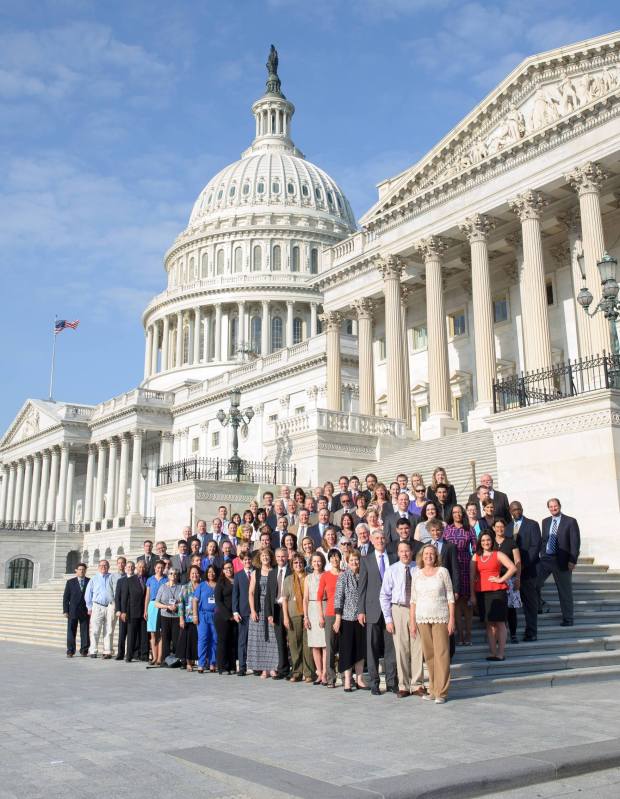
Attendees of the 2014 Colorado Capital Conference. (Courtesy photo)

As Udall said, the media tends to report only the conflicts between the two parties. It was refreshing to see Udall and various members of Congress on both sides of the aisle shaking hands, showing respect for and seriously listening to one another. It at least gave me the hope that Washington really isn’t broken, even if it may seem so. My recommendation to you is to turn off the TV and go see how Washington works for yourself at next year’s Colorado Capital Conference. It just may surprise you as well. For more information on the conference, visit coloradomesa.edu/capitalconference/.