A Close-Up View of Washington, D.C.

Most of you probably know that visiting Washington, D.C. can be a fulfilling– if not a positively overwhelming – experience. There’s so much to do, see and learn in such a small geographic area that no matter how much time you have – from a few days to a few weeks – there is never enough time to see and experience it all.
For those of us lucky enough to live in Colorado, there’s an annual opportunity to visit the nation’s capital and experience it in an extraordinarily informative way. Every year, Colorado Mesa University, the University of Colorado and Colorado’s senior U.S. Senator host the Colorado Capital Conference in June. The conference gives Colorado residents the chance to interact with a the nation’s leaders, including senators and representatives from both sides of the aisle, cabinet members and leaders of the U.S. military.
Having recently returned from the conference, along with 99 fellow Coloradoans, I cannot begin to tell you how rewarding the conference was. It was not only informative, engaging and insightful, it also showed ways in which Washington is not broken, and that good work is being done by our representatives despite the sharp partisan squabbles reported in the national media. With a few days bookending the three-day conference for personal explorations, the Colorado Capital Conference is undoubtedly the key for those wanting to go behind the scenes in Washington D.C. More lucky Coloradoans will have the chance to do it next year, and presumably in years to come.
The conference kicked off on Tuesday, June 17, with a welcome reception in the U.S. Capitol’s Mike Mansfield room. Hosted by U.S. Sen. Mark Udall, Colorado Mesa University President Tim Foster and University of Colorado-Colorado Springs Chancellor Pam Schockley-Zalabak, the reception was a chance for briefing attendees on U.S. Capitol security measures, as well as to informally meet one another, enjoy a beer or two, snap a selfie with a member of the Colorado Congressional Delegation, and allow us normally casual Coloradoans to get used to wearing suits in the soupy humidity of Washington, D.C. in June.
The reception also afforded attendees the chance to hear from members of the Colorado Congressional Delegation including U.S. Sen. Michael Bennet and U.S. reps. Diana DeGette, Scott Tipton, Cory Gardner, Jared Polis, Doug Lamborn, Ed Perlmutter, and Mike Coffman, most of whom wouldn’t be presenting later in the conference.
Perhaps the most important lesson learned that evening is that it’s not OK to wonder the empty halls of the U.S. Capitol armed with a camera. While it was undoubtedly a unique time to see and photograph the quiet capitol rotunda, the suspicious Capitol Police officer wasted no time in escorting me back to the Mike Mansfield Room, where my tattletale badge clipped to my collar said I belonged.
Starting Wednesday, at 9 a.m., inside the impressive Capitol Visitor Center, the conference continued with Admiral James A. Winnefeld, vice chairman of the Joints Chiefs of Staff and the nation’s second highest-ranking military officer. With news of the Islamic State in Iraq and Syria, or ISIS, driving the Iraqi Army from northern Iraq dominating the national media that day, the discussion with Winnefeld quickly turned to that situation, for which he said there are no easy answers.
“It was a little bit of an intelligence surprise,” Winnefeld said of the occupation. “It’s one of those tipping point events that people didn’t anticipate. People ask, ‘Why don’t we do air strikes?’ It’s not that simple. We have a lot of partners in the region. ISIS is an adversary that melts in and out of populations; if we are not careful we could hit the wrong people.”
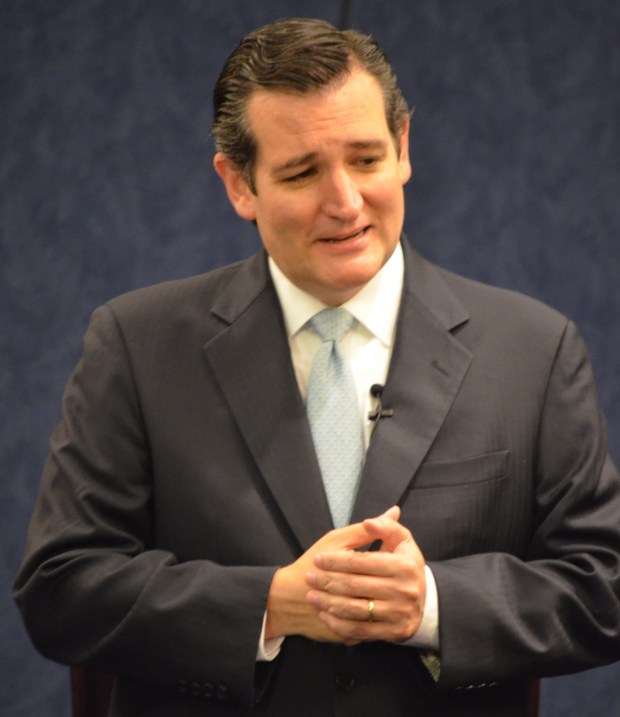
Up next was U.S. Sen. Ted Cruz, to talk about his number one goal in the Senate, which is “restoring jobs and economic growth” throughout the country. In a sermon-like fashion, Cruz said the key to economic growth is growth in small businesses. “Small businesses right now are hurting. We need to get back to an environment where businesses are improving,” Cruz said.
U.S. Rep. Paul Ryan made similar remarks, saying the “economy isn’t hitting near the potential” that it should be. He also said the Tea Party movement has done a “very good job” of getting elected Republicans “back to our principles.” And while Ryan said the Tea Party movement has been a benefit to Republicans, U.S. Sen. Chuck Schumer said the Tea Party movement is keeping some members of Congress from compromising, even with legislation like the Immigration Bill, that’s gained bi-partisan support but remains stalled out in the House.
“It’s a win-win in every way,” Schumer said of the Immigration Bill. “It was passed in the Senate with the bipartisan Gang of Eight. What’s holding it up? A small group in the House – Tea Party folks. Even though a majority would like to vote for the bill, they are scared to vote for the bill. Even Fox News supports our bill. The Tea Party threatens mainstream conservatives. They know they should do something, but they are afraid. They are the ‘pray yes, vote no’ caucus.”
At Thursday’s session, Sen. Carl Levin pointed out the positive effect the U.S. has had in Afghanistan. “I have been to that country a dozen times, and the difference between then and now is huge,” Levin said, of the war. “We have made a very positive difference there. We achieved a lot. Got maybe eight to 10 times more kids in school. There are more teachers. The life expectancy is better. The Army is strong. They hate the Taliban. I want to tell you, from my perspective, that we have made a real difference there.”
The range and topic of speakers varied from one 30 minute session to the next over two full days of the conference. U.S. Sen. John McCain vowed to work with Udall on making water a priority, as it will be the “gold” of the future.

Sen. Bennet said he’s fully engaged with work on the nation’s higher education system, with a goal of lowering costs and getting states more involved in funding for education, and the federal government less involved. Department of Interior Secretary Sally Jewell said regulators should exhale a bit before any damaging oil and gas regulations are passed.
Charlie Cook, editor and publisher of the Cook Political Report, said, in essence, during his lunchtime keynote speech, that Democrats will probably have a problem keeping the Senate in the upcoming November election. But a bigger problem lies in the hands of the Republicans, as various voter demographics shift to the Democratic Party in the long run. The list of topics, speakers and great information could go on and on.
With a Congress that’s often deadlocked and seen as broken, Schumer was asked how he keeps moving forward as a leader. He said he always tries to find the positive.
“To succeed in politics, which is daunting these days, you always have to look at the glass half-full,” Schumer said. “First, I try to look at the good in people. I always try to put myself in the other person’s shoes. If you lose spirit, if you get angry, you should do something else.”

Udall echoed Schumer’s philosophy of positivism, going a step further to say there is good being done in Washington; it’s just not reported in the mainstream media. “A lot of us here won’t give up,” Udall said. “The media plays up what we are not doing. What they don’t do is what we have done. We passed the Farm Bill, we have an infrastructure bill that’s underway. We have a budget in place for two years. There are actions and successes here but what the press wants to report on is the conflicts.”
While I have always respected Udall as our senior Senator in Washington, I must say I came away with even more respect for him at the conference. One would think that the hosting U.S. senator of the conference may stop in and say hi a few times during the event, and call it quits. During the entire conference, Udall left only once, to go vote on an issue in committee. Otherwise, he spent the entire conference introducing guests, shaking hands and taking the opportunity to present his Washington to the small group of Coloradoans very seriously.
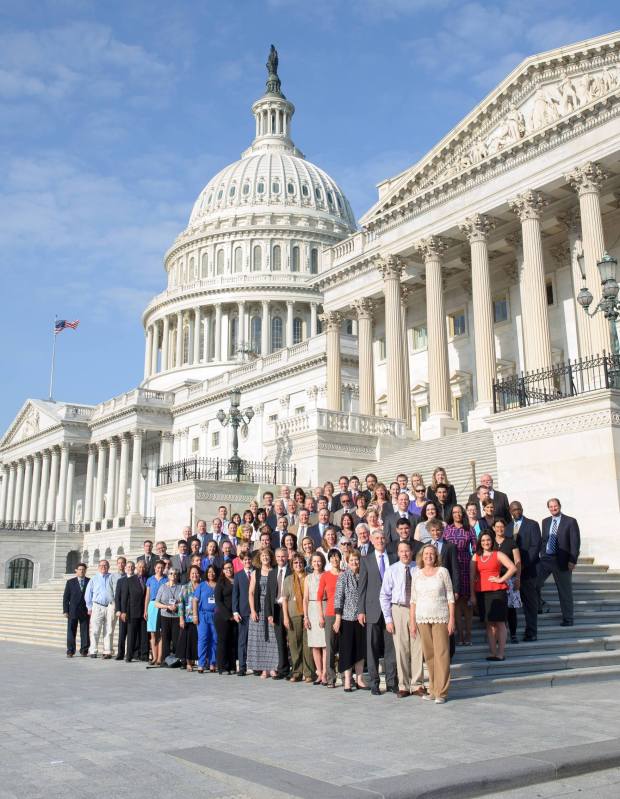
As Udall said, the media tends to report only the conflicts between the two parties. It was refreshing to see Udall and various members of Congress on both sides of the aisle shaking hands, showing respect for and seriously listening to one another. It at least gave me the hope that Washington really isn’t broken, even if it may seem so. My recommendation to you is to turn off the TV and go see how Washington works for yourself at next year’s Colorado Capital Conference. It just may surprise you as well. For more information on the conference, visit coloradomesa.edu/capitalconference/.
 Gus Jarvis